Summary
Horror gamestypically come in two flavors. There aresurvival horror games likeResident EvilandSilent Hill,where the player is given a weapon, painfully meager caches of ammo, and some tools to fight back against enemies. These games often encourage players to engage in combat, but to do so carefully, ensuring every shot counts and wasting as few precious resources as possible.
Then there are horror games in which players have no means of defense, loosely dubbed “hide and seek” horror. Alsosometimes characterized as “walking simulators,“these games give players two options when encountering a monster:run or hide. While these games don’t often feature the same degree of adrenaline-fueled action as their counterparts, they make up for it by provoking sheer terror—the kind that feels a little too authentic to how players might actually feel were they to face a monster. The horror games that get this dynamic right and force their players tohide from monstersmake for some of the most terrifying experiences in the gaming world.

Developer
Zeekerss
Sometimes, a game twists an original idea and creates something special. In this case, that game isIt Steals.Part puzzle game, part survival horror,It Stealsfeatures five game modes, each based around a unique mechanic. The thing is, the player doesn’t know what those mechanics are. They’re provided with all the tools to figure them out, but determining the right course of action will require some trial and error.
While it doesn’t get a ranked entry on this list, it’s worthy of a mention because, instead of the player hiding from the monster, it’s the monster that’s hiding from the player. From an invisible phantom to monsters that blend into the walls,It Stealsputs a unique spin on first-person survival horror that is one of a kind in the current genre landscape.

Krillbite Studio must have a plaque in the office with “Player Vulnerability” emblazoned on it in big, bold letters. It’s an idea that the most effective horror games play off of, but it’s hard to imagine a more vulnerable gaming avatar than a two-year-old child. Well, that’s exactly whoAmong the Sleepcasts its players as.They play as a toddler,one so young that they can’t even run for very long, or they’ll lose coordination and fall down.
The player’s goal is to find the child’s mother, but the journey will take them through their house and into some other, much more surreal environments. Of course, there are also monsters—two of them, to be exact. There’s no way a two-year-old could fight back against malevolent beings like these, so the player’s only option is to hide under tables or chairs and hope they aren’t spotted.

A PS2 classic,Haunting Groundstars Fiona, an 18-year-old girl who is involved in a car accident. She wakes up in the dungeon of an old castle, completely unclear on how she got there, or even where “there” is. In short order, she meets a dog named Hewie, and as she befriends him throughout the game, players unlock more commands they can issue.
Commanding Hewie is important because Fiona is almost completely helpless. She can run, and she can do a little dodge. Those are the only ways she can deal with a monster that’s spotted her, and both actions cost stamina, which is in limited supply. Instead, hiding and avoiding combat when possible is almost always better. Hewie can be sent to attack enemies as a distraction, some items can be thrown to damage monsters, and occasionally, players will find a Retaliation Point, allowing them to fight back using the environment. These Retaliation Points are one and done, though, so players must pick their battles very carefully.

Monstrumis a survival horror gamewith roguelike elements.The player is the sole survivor on the cargo shipHisa Maru,and everyone else is dead because a monster is on the loose—one of three monsters, to be exact. Part of the roguelike nature of this game is that, on any given run, players won’t know which monster they’re dealing with until it rears its ugly head. Each monster has its own unique design, abilities, and AI, which means its behavior will vary as well. The Brute charges right at the player, ignoring stealth and doors alike, while the Fiend toys with them, moving items and opening doors with its telekinesis.
The ship’s layout also changes on each run, and items will change places accordingly. That means that, on the player’s quest to escape theHisa Maru, they’ll have to plot a new course to success each time. It’s a remarkably effective combination. Since players can’t fight back, they’ll often be sent fleeing through the ship, quickly getting lost in its ever-changing corridors and having to carefully find their way back to the rooms and items they need to reach safety.

It might seem obvious, but not everyone realizes how isolating working on an offshore oil rig can be. Sure, there are other workers there for company, but should something go wrong, escape isn’t exactly readily available. This is something that The Chinese Room embraces in their game,Still Wakes The Deep.Players control “Caz” McLeary, an electrician on the Beira D oil rig in the frigid North Sea. When a storm cuts off all communications, andsomething from deep below makes its way on board,players must help Caz find any possible means of escape.
At its core,Still Wakes The Deepis a walking simulator. Caz can run, jump, and climb, and he has a flashlight to illuminate dark rooms. Beyond that, he is totally helpless and must find ways to hide or flee when the monsters spot him. This may sound simplistic, but the short runtime and stellar storytelling present inStill Wakes The Deepdo more than enough to drive players forward towards the game’s shocking conclusion.

It takes a certain kind of journalist to willingly explore a remote and abandoned insane asylum in search of evidence for the heinous crimes that took place there. Luckily (or unluckily), Miles Upshur is one such journalist, which makes him the protagonist inOutlast.He arrives at Mount Massive to find that the staff and doctors have been murdered, mutilated, and scattered through the asylum’s halls.
With nothing but the night vision mode on his battery-operated camcorder to help him see in the pitch-black asylum, Miles must navigate Mount Massive in search of answers to both his investigative questions and the new inquiries that arise as he witnesses the brutal massacre that took place there. Naturally, a camcorder doesn’t make for a particularly good weapon, which forces players to hide in empty lockers, under tables and beds, or anywhere else they can find whenever the hulking monstrosity known as Chris Walker comes lumbering into view.

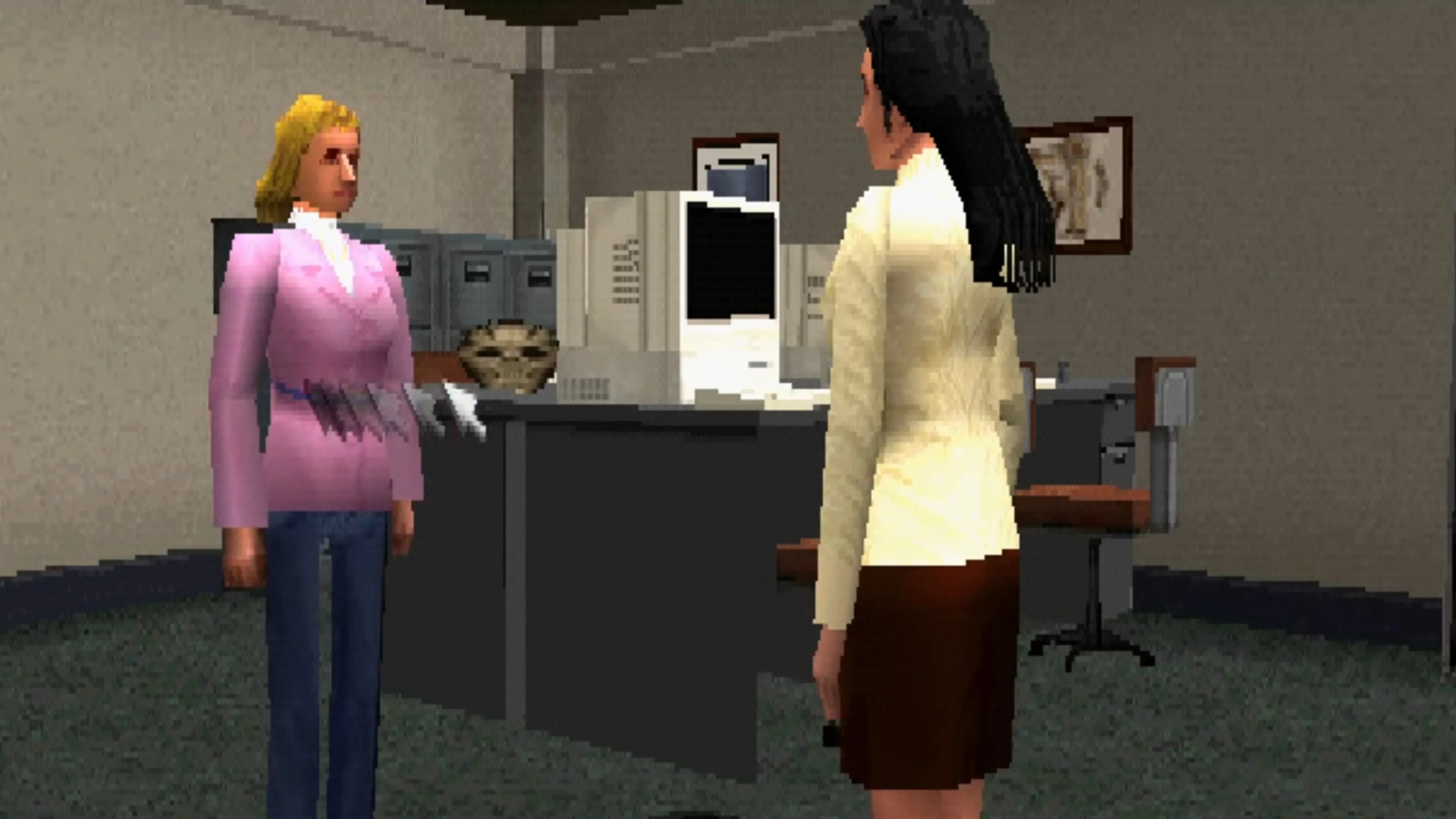
Point-and-click adventure games haven’t synergized well with the horror genre in quite some time; basically, since the originalResident Evilbroke onto the scene. However, one of the games that nailed the blend of these genres was 1995’sClock Tower.Developed by Human Entertainment for the Super Famicom system, it casts players as Jennifer Simpson, an orphan recently adopted by the Barrows family. However, when Jennifer arrives at her new family’s mansion along with a group of other girls, one of them is murdered by a mysterious figure named Scissorman.
The game involves players picking their way through the Barrows mansion—affectionately named the “Clock Tower”—to try and escape from Scissorman. However, Scissorman is a constant threat, and Jennifer must either hide from him or use traps around the environment to evade his clutches. WhileClock Towerhasn’t aged well outside of its spooky atmosphere, it is widely considered a progenitor of the survival horror genre, particularly the sub-genre of walking sim horror games where players can’t fight back.Its PS1 re-release,Clock Tower: First Fear,is considered more approachable for modern players but takes away from the original’s authentic vision.
As might be expected from the title, Daniel wakes up in Castle Brennenburg with no memory of who he is or what he is doing there. This sets up the narrative ofAmnesia: The Dark Descent,where players must guide Daniel through the castle, finding clues and solving puzzles along the way. However, they’ll also encounter a number of monsters in the castle, and Daniel, who is only equipped with a lantern, will have no choice but to either hide or run away.
The Sanity meter inAmnesia: The Dark Descentcomplicates this tremendously. Daniel’s sanity will deteriorate if he looks at a monster for too long or spends too much time in the dark. However, monsters will spot the light from his lantern, meaning that darkness is his friend when hiding becomes necessary. It’s a fine and stressful balance that players must strike. They’ll need to look at the monsters to see where they are in order to sneak past, but they can’t look for too long—or spend too long in their hiding spot—lest Daniel’s sanity run out, which results in a Game Over. It creates a sense of palpable fear, forcing players to engage with the game as they would if they found themselves in Daniel’s terrifying situation.

WhileAmnesia: The Bunkeris arguably the best game in the series, and certainly the most refined, it does feature weapons that allow the player to fight back against the game’s monster, and even kill it under the right circumstances. Therefore, even though it’s a great game, it doesn’t quite fit this list.
It’s unlikely that any gamers familiar withAlien: Isolationare surprised to find it at the top of this list. When it comes to games that force players to hide from a pursuing monster,Alien: Isolationis the poster child. This is due in large part to the game’s exceptional Xenomorph AI. Players are tasked with evading the creature at all costs, as being spotted is almost a guaranteed death. However, the Xenomorph is smart and will remember any tactics players have used to escape it previously. It feels like fleeing from a truly organic and lifelike monster.

While players, controlling Amanda Ripley, do have the means to fight back against the game’s other enemies—from human security to rogue androids—these same tools are only effective at briefly driving away the Xenomorph. Even then, it’s a one-use solution, as the alien won’t fall for the same tricks twice. Hiding and running are the only true means of survival, and even then, they’re not a guarantee. If the Xenomorph spots Amanda, there is no escape.
